The Ghost in the Machine: Why Your Next Car Won't Need a Steering Wheel (or a Gas Tank)
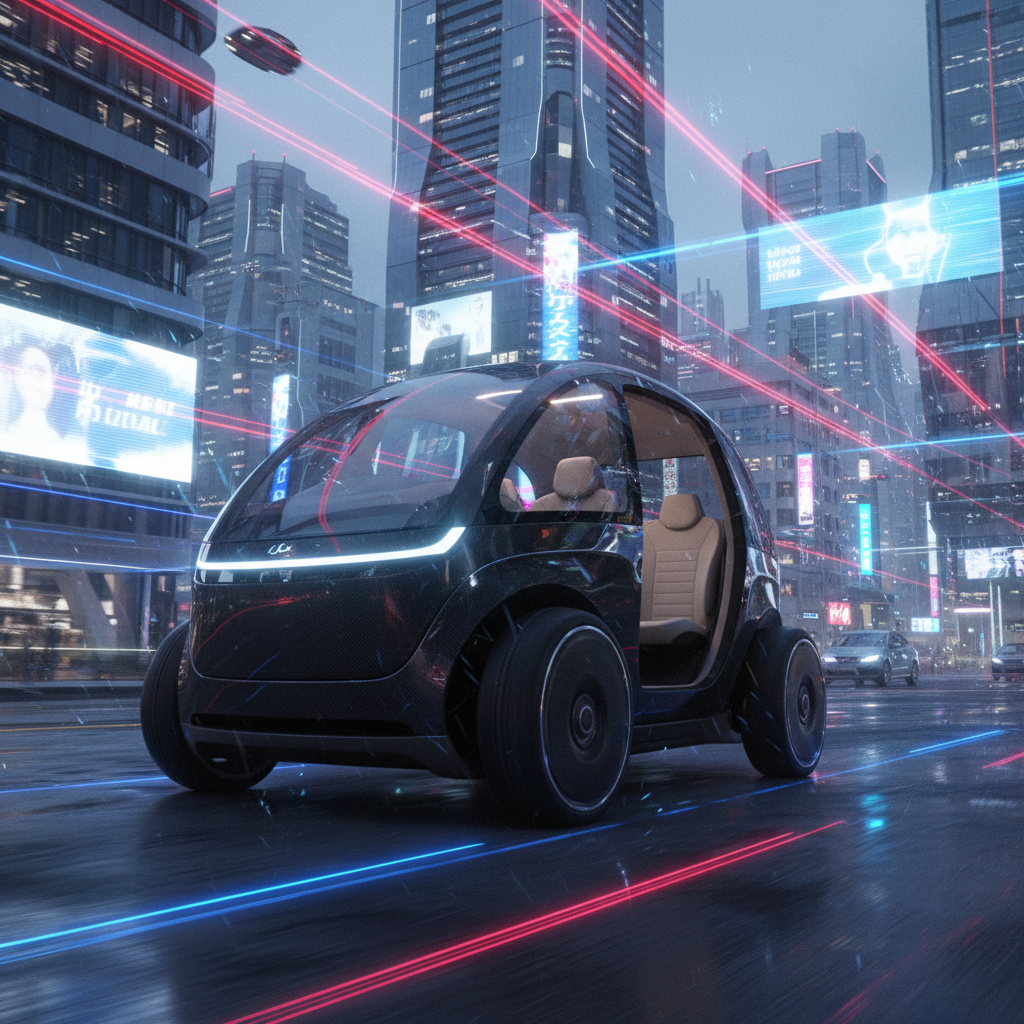
Imagine it’s 2024. You just spent $60,000 on a high-end diesel SUV, thinking you’ve made a solid investment for the next decade. Fast forward to today, February 2026, and that "asset" is a boat anchor.

The Ridge Wallet - Slim Minimalist Compact Wallet and Card Holder| RFID Protected Front Pocket Wallets | Integrated Money Clip | Forest Green
In just two years, the resale value of traditional internal combustion vehicles has cratered. Why? Because the world didn't just go electric; it went autonomous.
At LG Comércio e Negócios, we’ve seen businesses lose millions by ignoring this shift. They treated EVs as just "cars with batteries" instead of what they actually are: mobile data centers.
If you aren't planning for a world where the car drives itself and pays for its own charging, you’re already behind the curve. Let’s cut to the chase and look at how the future of autonomous electric vehicles is actually playing out.

Thetis Pro FIDO2 Security Key, Two Factor Authentication NFC Security Key FIDO 2.0, Dual USB A Ports & Type C for Multi layered Protection (HOTP) in Windows/MacOS/Linux, Gmail, Facebook,Dropbox,Github
Introduction to the Future of Autonomous Electric Vehicles
The dream of the self-driving car has been "five years away" for about twenty years. But in 2026, we’ve finally hit the tipping point where the tech matches the hype.
The Convergence of Electrification and Automation
You can’t have true autonomy without electrification. Trying to automate a gas engine is like trying to teach an old dog to perform brain surgery—it’s too clunky, too slow, and has too many moving parts.
Electric motors respond instantly to computer commands. This synergy is the secret sauce making Level 4 and Level 5 automation a reality on our streets today.
Why Software-Defined Vehicles (SDVs) are the Foundation
We used to buy cars for their horsepower or leather seats. Now, we buy them for their operating systems.
An SDV is essentially a smartphone on wheels. It gets better over time through over-the-air (OTA) updates, fixing bugs and adding features while you sleep.

Apple 2025 MacBook Air 15-inch Laptop with M4 chip: Built for Apple Intelligence, 15.3" Liquid Retina Display, 16GB Unified Memory, 256GB SSD Storage, 12MP Center Stage Camera, Touch ID, Sky Blue
The Shift from Private Ownership to Shared Mobility
At the end of the day, owning a car is a financial disaster. It sits parked 95% of the time, losing value every second.
We are seeing a massive pivot toward fleets. Why own a depreciating asset when you can summon a robo-taxi for a fraction of the cost?
Core Concepts Driving the Future of Autonomous Electric Vehicles
The engineering behind these machines has moved far beyond just "big batteries." It’s about creating a digital ecosystem that can survive the chaos of real-world traffic.
Virtual Design and Digital Twins in Vehicle Development
We don't just build prototypes and crash them into walls anymore. Engineers now use Digital Twins to simulate millions of miles in virtual environments before a single bolt is tightened.
This virtual design process has slashed development times by years. It allows us to test how a car reacts to a blizzard in Chicago while the engineers are sitting in a sunny office in Lisbon.

HKDGYHON Webcam Cover Slide, 0.028 Inch Ultra Thin Laptop Camera Cover Blocker, Web Cam Privacy Cover for MacBook iPhone iPad iMac, Protect Your Visual Privacy Security (Multi-Color-6 Pack)
Enhancing Powertrain Efficiency and Battery Longevity
The "range anxiety" of 2022 is a memory. New Solid-State Batteries and improved Powertrain Efficiency mean these cars can run for 500 miles on a single charge.
More importantly, AI now manages the battery’s health. It predicts wear and tear, ensuring the vehicle stays on the road longer with less maintenance.
Electronic Reliability and System Redundancy for Safety
If your laptop freezes, you restart it. If your car’s computer freezes at 70 mph, you’re in trouble.
That’s why 2026 models use triple-redundant systems. If one "brain" fails, two others are already running the math to keep you safe.
The Role of Artificial Intelligence in Real-Time Decision Making
Edge Computing is the real hero here. The car doesn't wait for a signal from a cloud server to slam the brakes.
It processes gigabytes of sensor data—from LiDAR, radar, and cameras—locally, in milliseconds. It’s faster than a human reflex, every single time.
Glossary of Key Terms in Autonomous and Electric Mobility
Before we go further, let’s clear up the jargon. If you’re talking to a C-level executive, use these terms to show you know your stuff.
- ADAS (Advanced Driver Assistance Systems): Think of this as the "training wheels." It’s tech like lane-keep assist and adaptive cruise control.
- V2X (Vehicle-to-Everything): This is the car "talking" to traffic lights, other cars, and even the road itself to prevent jams.
- Level 5 Automation: The holy grail. No steering wheel, no pedals, and no human intervention required in any condition.
- TaaS (Transport-as-a-Service): Buying rides instead of buying cars. It’s the Netflix of moving from point A to point B.
- BEV (Battery Electric Vehicle): A pure electric car. No gas, no hybrid nonsense—just a battery and a motor.
- Software-Defined Architecture: A vehicle built around its computer system rather than its mechanical parts.
Case Study: Real-World Applications of AEVs Today
This isn't science fiction. It’s happening in 39 global markets as we speak.
Robo-taxis and the Transformation of Urban Commuting
In cities like Phoenix and Shenzhen, robo-taxis are the norm. They don't get tired, they don't get road rage, and they don't expect a tip.
Commuters are reclaiming their time. You can answer emails or take a nap while the car handles the gridlock.
Last-Mile Delivery Solutions and Logistics Efficiency
The "last mile" is the most expensive part of shipping. AEVs have fixed that.
Small, autonomous delivery pods now roam suburban sidewalks. They’ve turned [sustainable logistics] from a buzzword into a massive cost-saving reality for retailers.
Lessons from Global Pilot Programs in 39 Markets
We’ve learned that infrastructure matters more than the cars themselves. The cities that invested in smart sensors and 5G are seeing 30% faster traffic flow.
The data shows that AEVs are significantly safer than human drivers, but only when the "rules of the road" are digitally clear.
Insights from the 2025 Annual Global Executive Survey
According to the latest industry data, 65% of logistics CEOs plan to transition to at least 50% autonomous fleets by 2028.
The ROI is too big to ignore. Lower insurance, zero fuel costs, and 24/7 operation are a game changer for the bottom line.
Navigating the Risks and Security Challenges
Let’s be real: it’s not all sunshine and rainbows. Connecting a two-ton machine to the internet creates massive targets for bad actors.
Cybersecurity Threats: Protecting Connected Devices from Tampering
A car is now a "connected device." That means it can be hacked.
We’ve seen "white hat" hackers take control of steering systems from miles away. Manufacturers are now doubling down on encrypted hardware to prevent catastrophic tampering.
Data Privacy and the Ethics of AI Decision-Making
Who does the car save in an unavoidable accident? The passenger or the pedestrian?
These ethical dilemmas are now being coded into law. Plus, the amount of data these cars collect on your location and habits is a GDPR nightmare waiting to happen.
Sensor Anomalies and Vulnerabilities to Cyber-Attacks
LiDAR and cameras can be fooled. A simple laser pointer or a well-placed sticker on a stop sign can confuse an older AI.
The industry is racing to build "adversarial-proof" vision systems that can see through these tricks.
Regulatory Frameworks and Infrastructure Limitations
The tech is ready, but the laws aren't. We have a patchwork of rules that change every time you cross a state line.
Until we have a global standard for autonomous liability, the rollout will remain frustratingly slow in some regions.
Predicting the Future of Autonomous Electric Vehicles Beyond 2026
Where are we heading? The next five years will be more disruptive than the last fifty.
The Rise of Transport-as-a-Service (TaaS) as a Global Standard
By 2030, owning a car in a major city will be a hobby for the rich, like owning a horse.
TaaS will be the default. It’s cheaper, greener, and infinitely more convenient than dealing with parking and maintenance.
Affordability and the Mass Market Commercial Breakout
We are finally seeing the "$25,000 EV" that was promised years ago.
Economies of scale and cheaper battery chemistry have made AEVs accessible to the middle class, not just tech bros in Silicon Valley.
The Role of Hybrids as a Structural Bridge to Full Autonomy
I’ll be honest: pure EVs aren't ready for the deep outback or rural Siberia yet.
Hybrids are acting as a vital bridge. They allow for autonomous features while keeping the safety net of a liquid fuel tank for long-haul routes.
Smart Systems and the Integration of Renewable Energy Grids
Your car is now a battery for your house. Through [renewable energy integration], AEVs can feed power back into the grid during peak hours.
It’s a circular economy. The car charges when power is cheap and sells it back when it’s expensive. It literally makes money while it sits in your driveway.
Conclusion: Embracing a New Era of Mobility
The future of autonomous electric vehicles isn't just about changing how we get to work. It’s about changing how we build our world.
We are moving toward a future with fewer parking lots and more parks. Fewer accidents and more productivity.
It’s a massive shift in human history. At LG Comércio e Negócios, we believe the winners won't be those who build the fastest cars, but those who build the smartest systems.
The transition is messy, expensive, and a little bit scary. But at the end of the day, there’s no turning back. The ghost is in the machine, and it’s a much better driver than you are.
FAQ: Common Questions About Autonomous Electric Vehicles
How safe are autonomous electric vehicles compared to human drivers in 2026?
Data from 2025 shows that Level 4 autonomous systems have 75% fewer "critical sensing errors" than human drivers. While they aren't perfect, they don't get distracted by phones or drive while tired. Most accidents involving AEVs are actually caused by human drivers hitting the autonomous car from behind.
When will Level 5 fully autonomous EVs be available for purchase?
For the average consumer, Level 5 (no steering wheel) is still mostly restricted to geofenced urban areas and corporate fleets. We expect a wide commercial breakout for private purchase by 2028. However, the high cost of the sensor suites makes TaaS a much more logical choice for most people right now.
How does cold weather affect the range of an autonomous EV?
Cold weather is still a challenge, but we've made strides. Modern AEVs use heat pumps and thermal management systems to keep batteries at the "sweet spot." You might see a 15-20% drop in range in extreme cold, but the AI now accounts for this in its route planning to ensure you never get stranded.
What are the primary cybersecurity risks for connected vehicles?
The biggest red flag is "Remote Hijacking." Hackers could theoretically target a vehicle's V2X communication to send false signals. To mitigate this, manufacturers are using blockchain-based identity verification for every piece of data the car receives from the road.
Will autonomous vehicles reduce traffic congestion in major cities?
Yes, but only if we move to shared mobility. If everyone just replaces their private car with a private autonomous car, traffic might actually get worse because cars will drive around empty. The real solution is the integration of AEVs into [future of smart cities] where traffic flow is managed by a central AI.